
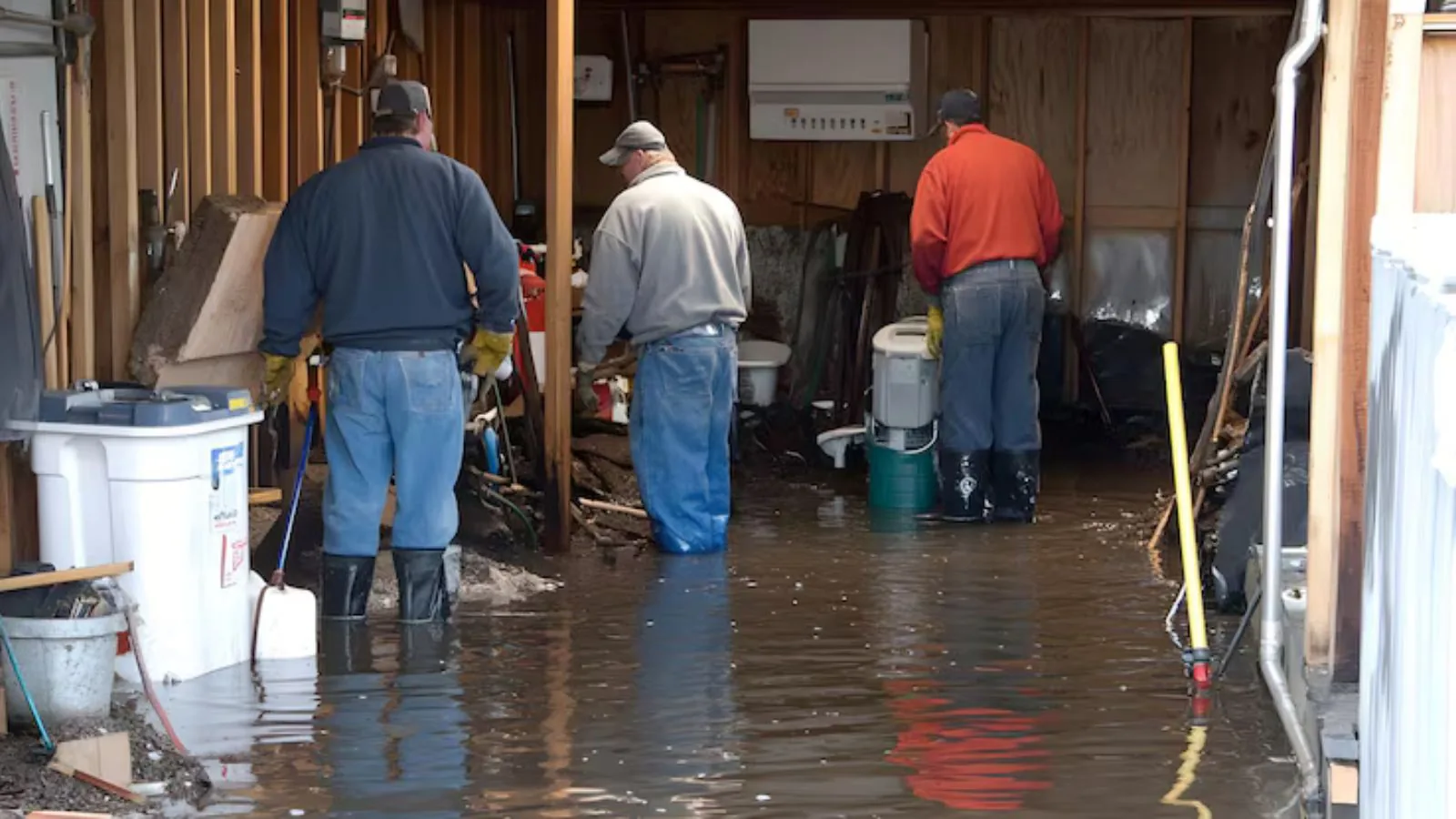
Standing water is an emergency because it keeps soaking into drywall, subfloor and framing for as long as it sits there. Our dispatch line answers 24/7, so call at any hour. While you wait, stop the source if you can reach it safely, keep people and pets out of deep water, and lift small valuables onto dry surfaces. Call (833) 521-1033 and describe what you see.
Water extraction is the first physical step of water damage restoration in West Chester. Pumps and extraction units remove the bulk water so drying can begin. It is not the same as structural drying, which pulls moisture out of the materials afterward, or flood damage cleanup, which handles rising creek and groundwater.
When standing water is an emergency
Not every puddle needs a pump, but a few situations should not wait for morning. If water reaches outlets, a panel, or a furnace, treat it as an electrical hazard first and a cleanup job second.
Water that has been standing a day or more also changes character. It picks up dirt and bacteria from the floor and the building materials, and carpet pad and drywall start to wick it upward.
- Water deeper than the baseboard or still rising in a basement, garage or ground floor.
- Water coming from a supply line, a water heater or an appliance that you cannot shut off.
- Any water that touches electrical outlets, a breaker panel, a furnace or a water heater burner.
- Water that smells like a drain or looks gray or brown, which points to a contaminated source.
Electrical safety comes first
Do not wade into standing water if outlets, cords or the panel could be live. Cut power at the breaker only if the panel is in a dry spot you can reach without stepping in water.
If you cannot do that safely, call your electric utility or 911 before you call a restoration company.
How the water actually gets removed
Deep water goes first, usually with submersible pumps and hoses run to a drain or the street. Once the depth drops to an inch or two, extraction units with a wand pull water from carpet, pad and hard floors.
The volume is larger than most people expect. One inch of water across a 1,000 square foot floor is roughly 620 gallons, and each gallon weighs about 8.3 pounds. A quarter inch in the same space is still over 150 gallons sitting on your subfloor.
| Where the water came from | Typical water category | What happens first |
|---|---|---|
| Broken supply line or tank | Category 1, clean at the start | Shut off the source, pump and extract, then dry |
| Dishwasher or washer discharge | Category 2, gray water | Extract, remove soaked pad, clean and dry |
| Rain or ground water through a wall or floor | Category 2 or 3 | Extract, test materials, remove what cannot be cleaned |
| Sewage backup or creek overflow | Category 3, contaminated | Protective gear, extract, remove porous materials |
Water on the floor right now?
Dispatch is open 24/7. Tell us what you see and what you have already shut off.
What extraction does not do
Pulling the standing water out is the beginning, not the end. Wet drywall, baseboards, carpet pad and subfloor still hold moisture that no pump can reach, and that moisture is what grows into mold if it is left.
After extraction the crew checks materials with moisture meters and maps where the water traveled. From there the job moves to air movers, dehumidifiers and, where needed, removal of materials that cannot be dried in place. A written scope and price are explained before that work starts.
West Chester water sources worth knowing
Most homes in West Chester Township get public water and sewer service from the Butler County Water and Sewer Department. If a main outside your home fails, that is the utility's problem, but a leak after the meter is yours to stop and clean up.
The township maintains ditches, culverts and catch basins in the public right of way. Pipes and drains on private property belong to the owner or the homeowners association. After heavy rain in 2020 the East Fork of the Mill Creek overflowed near Windisch Road and Allen Road, so ask your township or the FEMA flood map about water near creeks before assuming a pump is the whole answer.
What Shapes The Cost
Extraction cost is driven by how much water is there, how far it traveled, and what it touched. A short, clean-water job in one room looks very different from a finished basement that sat for two days.
- Water categoryClean, gray or contaminated water changes the gear, the protective equipment and what has to be removed.
- Depth and floor areaGallons to move and the number of rooms the water reached set the pumping and labor time.
- Materials soakedCarpet and pad, hardwood, drywall and insulation each absorb water differently.
- How long it satHours versus days decides whether pad and drywall can be dried in place or must come out.
- Access and rebuild scopeStairs, tight crawl spaces and any repair work after drying add to the scope.
Whether your policy pays depends on the cause. Sudden and accidental discharge is often covered, while slow seepage and neglect often are not. Take photos and keep receipts, then ask your insurer.
Common Questions
Do you handle water extraction emergencies at night or on weekends in West Chester?
Yes. The dispatch line answers around the clock, including nights, weekends and holidays. When you call after hours, we ask about the source, the depth and whether power is a concern, then arrange the crew.
How deep does the water need to be before it needs extraction?
There is no minimum. Even a thin film can wet carpet pad and the bottom of drywall. If you can see water on the floor or hear squishing under carpet, a moisture check is worth a call.
Can I just use a household wet vac?
A wet vac helps with a small spill from clean water. It cannot keep up with a flooded room, it does not reach pad under carpet, and it should never be used on sewage or contaminated water.
Do you pump out yards or pools?
No. Outdoor yard and pool pumping is a different service. We extract water that has gotten inside a home or business.
Is the job done after the water is out?
Not yet. Materials stay wet after extraction, so drying and moisture readings come next. See structural drying for what that stage involves.
Service area for water extraction
We dispatch across West Chester Township, including ZIP codes 45069 and 45071, and into Cincinnati through our Cincinnati water damage restoration coverage.
If the water came from a basement, see basement water damage cleanup. If it came from sewage, read sewage backup cleanup before touching anything.