
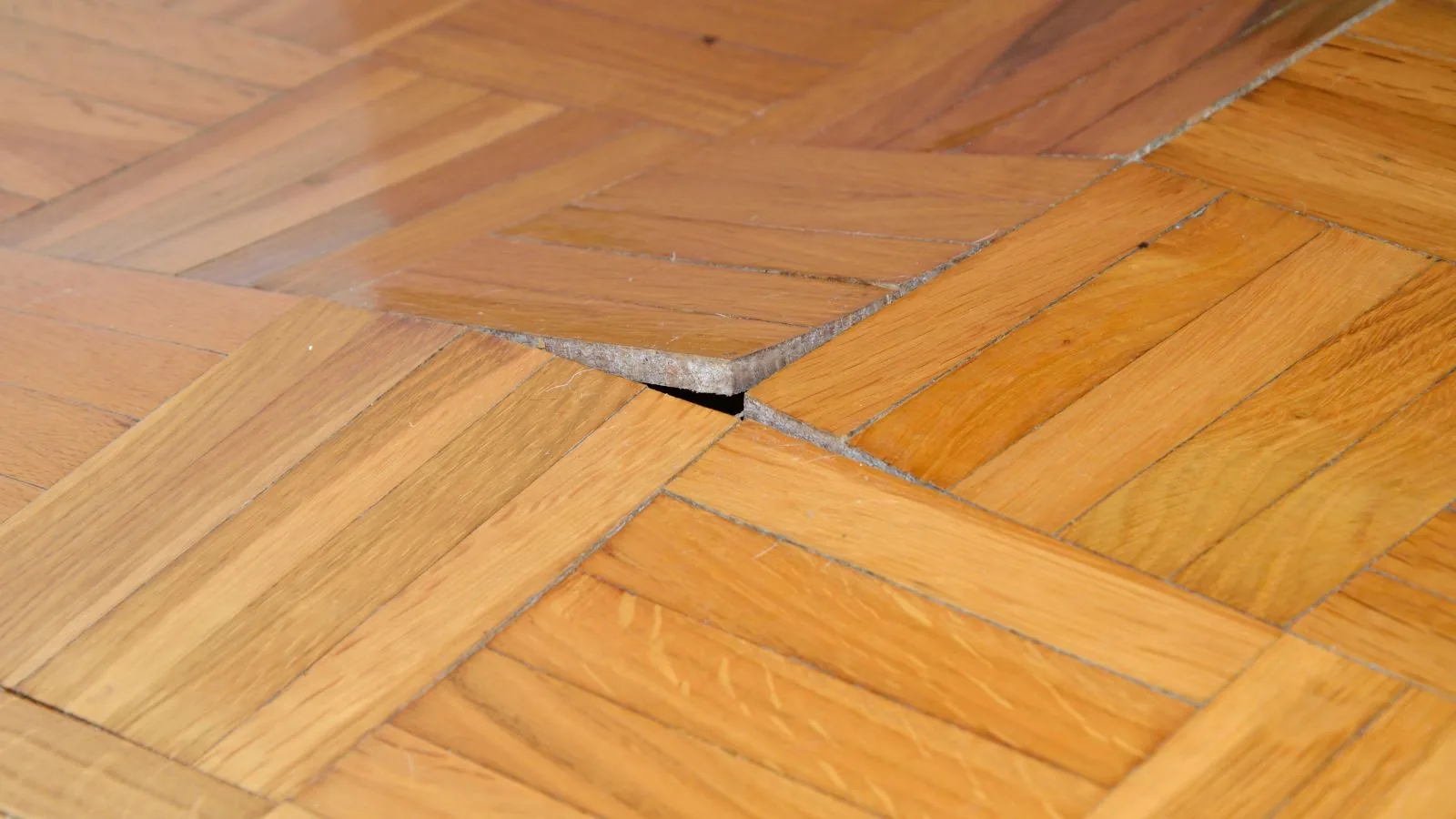
Hardwood soaks up water from below and from the sides, and the first signs, such as cupping or gaps, often appear days later. Stop the source, wipe up standing water, lift rugs and furniture, and call our dispatch line. Do not use heat to speed drying. Call (833) 521-1033 and tell us how long the floor has been wet.
Hardwood floor water damage repair covers solid and engineered wood, whether glued, nailed or floating. Carpet has its own page at carpet water damage restoration, and a wet slab under flooring is covered in slab leak water damage.
What water does to hardwood
Wood is porous and swells as it takes on moisture. Boards usually swell more on the underside, which makes the edges rise and the center dip. That is called cupping. If moisture keeps building, boards can lift off the subfloor, which is called buckling.
Drying a hardwood floor too quickly can cause its own problems, so the pace is managed. Readings tell the crew when the wood has returned to a stable moisture level.
- Cupping: edges higher than the center.
- Crowning: the center higher than the edges, often after sanding a cupped floor too soon.
- Buckling: boards lifting from the subfloor.
- Staining and dark spots from standing water or mold.
Solid wood versus engineered
Solid boards can often be dried and refinished if the water was clean and caught quickly. Engineered flooring has a thin top layer over plywood or composite, and water can delaminate it.
Whether the floor is glued, nailed or floating matters. Floating floors can sometimes be lifted to dry the subfloor. Glued floors are harder to access.
| Flooring type | Water behavior | Typical path |
|---|---|---|
| Solid, nailed | Swells and cups, can recover | Dry in place, assess, refinish |
| Engineered, floating | Edges swell, layers can separate | Lift, dry the subfloor, replace if damaged |
| Glued to a slab | Moisture trapped underneath | Dry the slab, assess boards |
| Laminate | Core swells and seams open | Usually replaced |
Hardwood floor wet?
Stop the source and call us before boards cup.
How hardwood is dried
Specialty drying systems can pull moisture from under the boards using mats and vacuum, while dehumidifiers control the air. The crew monitors boards with moisture meters and compares readings to dry reference wood.
If a floor can be dried in place, it often needs time to settle before sanding. Refinishing before the wood has stabilized can lead to gaps and cupping returning.
When boards have to go
Boards that have buckled, split or delaminated usually cannot be saved. Floors wet with contaminated water are generally removed. Mold under the boards also forces replacement.
We tell you what we see and why. A floor that dries flat may still need refinishing, and you decide on repairs after the readings are in.
Aftercare once the floor is dry
Give a dried floor time to settle before any sanding or refinishing. Wood moves with humidity, so stable indoor conditions help it return to its normal shape. A floor that looks flat in week one may shift slightly in week three.
Keep rugs and furniture off the area until readings are stable, and keep the home at a steady humidity. If gaps or cupping return, tell the crew, because it can mean moisture is still arriving from below.
What Shapes The Cost
Hardwood outcomes vary because the species, the finish, the subfloor and the speed of response all matter.
- Wood type and constructionSolid, engineered, glued or floating each dry differently.
- Time wetHours versus days often decides if boards can be saved.
- Water categoryContaminated water usually means removal.
- Area affectedLarger floors need more drying mats and equipment time.
- Refinishing or replacementSanding, staining and board replacement are separate scope.
Coverage for flooring often follows the cause of the water. Photograph the floor before and during drying and ask your insurer what applies.
Common Questions
Can cupped hardwood go flat again?
Often, if it is dried slowly and the water was clean. Some floors stay slightly cupped and need sanding after they stabilize.
Should I sand the floor right away?
No. Sanding before the wood is dry can lead to crowning and gaps later.
Can I use a heater to dry it?
Direct heat can crack wood and finish. Controlled drying with dehumidifiers is safer.
Hardwood calls we handle
We serve West Chester Township, ZIP codes 45069 and 45071, and Cincinnati. Water often reaches floors from appliance leaks and kitchen water damage.
For how readings guide drying, see structural drying and dehumidification.