
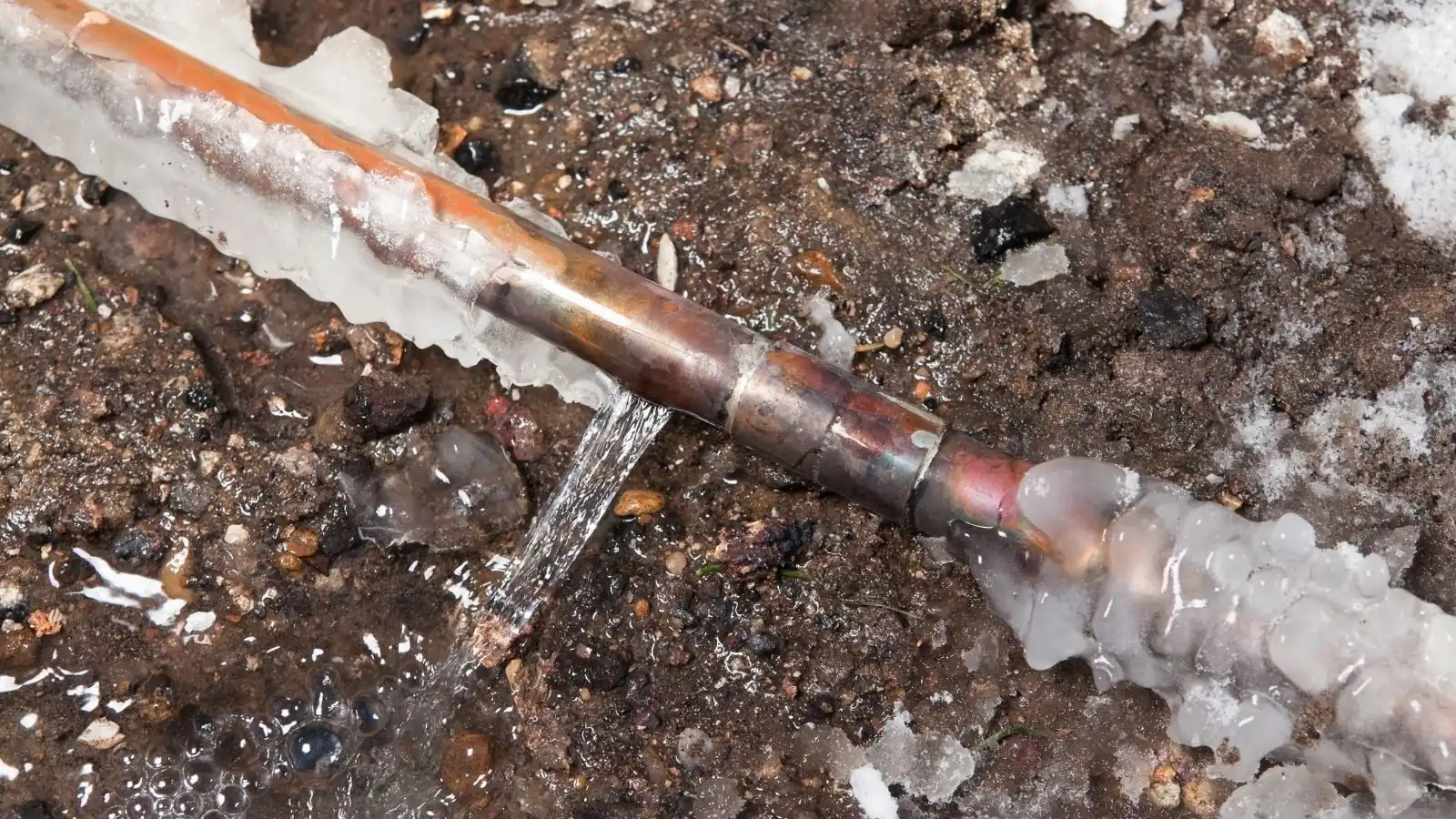
A burst pipe is the fastest way to flood a home, because supply lines stay pressurized until someone closes a valve. Shut off the main water valve first, then call. Our line is open 24/7, and while you wait you can turn off power to wet areas only if the panel is dry, lift furniture and keep everyone out of the water. Call (833) 521-1033 when the water is stopped.
This page covers water that comes from a failed pressurized supply line, such as a split copper pipe, a popped fitting or a cracked plastic line. If the pipe froze first, read frozen pipe water damage. If the leak is in the kitchen cabinets, kitchen water damage covers the cabinets and sink area.
When a burst pipe is an emergency: shut off the water first
The main shutoff is usually where the water line enters the house, often in a basement, utility room or near the water heater. Turn the valve clockwise until it stops. If a fixture has its own shutoff, closing that slows the flow too.
Open a faucet on the bottom floor after the main is closed. That drains the pipes and relieves pressure at the break. If you cannot find or close the valve, call the Butler County Water and Sewer Department for the utility side of the line.
Water and electricity
If water is falling through light fixtures or reaching outlets, stay away from the panel and call 911 or your electric utility. Never stand in water to flip a breaker.
Where burst pipe water usually ends up
A split in a wall pipe sprays inside the cavity, so the first sign is often a stain, a bubbling paint patch or a warm, damp spot on a wall. A break in an unfinished basement ceiling may drop water onto finished space below.
Water follows framing and wiring. A pipe under a second-floor bath can wet the ceiling of the room beneath, the wall cavity, and insulation in between. The visible damage is rarely the whole story.
| Break location | What gets wet | Common clue |
|---|---|---|
| Inside a wall | Drywall, insulation, baseboards | Stain, soft spot or paint blistering |
| Above a ceiling | Ceiling drywall, light fixtures, room below | Sagging, drip, brown ring |
| Under a floor | Subfloor, flooring, joists | Cupping boards, hollow sound, musty odor |
| Garage or utility room | Slab surface, stored items, wall bases | Standing water, running meter |
Pipe still running?
Close the main, then call the 24/7 line. We will walk through what to do next.
What the crew does on arrival
First, the water source is confirmed closed and the damage is mapped with moisture meters and, where useful, thermal imaging. Then standing water is extracted and wet materials that cannot be saved are cut out and bagged.
Air movers and dehumidifiers go in to dry what remains. Moisture readings are taken each visit and compared against dry reference readings, so drying stops when the numbers say it is dry, not when the calendar says so.
Repairing the pipe versus restoring the damage
Restoration is not plumbing. We dry and restore the building after the water. A licensed plumber repairs or replaces the failed pipe, and the repair order matters because drying cannot finish if water is still leaking in.
Keep the failed section of pipe if you can. Your insurer or plumber may want to see it, and a photo of the break, the shutoff and the wet areas helps document the loss.
What Shapes The Cost
Burst pipe jobs range from a single wet wall to several floors, so the final scope depends on how long the water ran and where it went.
- How long it ranA pipe closed in minutes soaks far less than one running overnight.
- Rooms and floors affectedWater that travels through ceilings and walls multiplies the drying area.
- Wall and ceiling materialsDrywall, plaster and insulation have different drying and removal needs.
- Drying equipment daysAir movers and dehumidifiers stay until readings reach dry standards.
- Rebuild scopeReplacing drywall, paint, trim and flooring is priced separately from mitigation.
Sudden pipe bursts are the kind of loss homeowners policies often respond to, though the pipe itself and long-term leaks are commonly excluded. Read your declarations page and ask your insurer what applies.
Common Questions
Do you handle burst pipe emergencies at night or on weekends in West Chester?
Yes. Burst pipes do not wait for business hours, and our dispatch line is open 24/7 including weekends and holidays. Call as soon as the water is shut off and we will arrange the next steps.
How fast should I shut off water after a pipe bursts?
As quickly as you safely can. Every minute adds gallons, and a standard supply line can release many gallons per minute when it fails completely.
Will drywall behind the break have to come out?
Often the section directly wet by the spray does, especially if it was saturated or the water was dirty. Moisture readings decide how far to cut.
Should I call my plumber or the restoration crew first?
Stop the water first, then call both. A plumber stops the leak at the source and the restoration crew starts drying so damage does not spread.
Where we respond
Burst pipe calls come in from across West Chester Township, ZIP codes 45069 and 45071, and from Cincinnati. If water has reached the ceiling below, see ceiling water damage repair.
Once the pipe is repaired and the structure is dry, wall and drywall water damage repair covers rebuilding what had to be removed.