
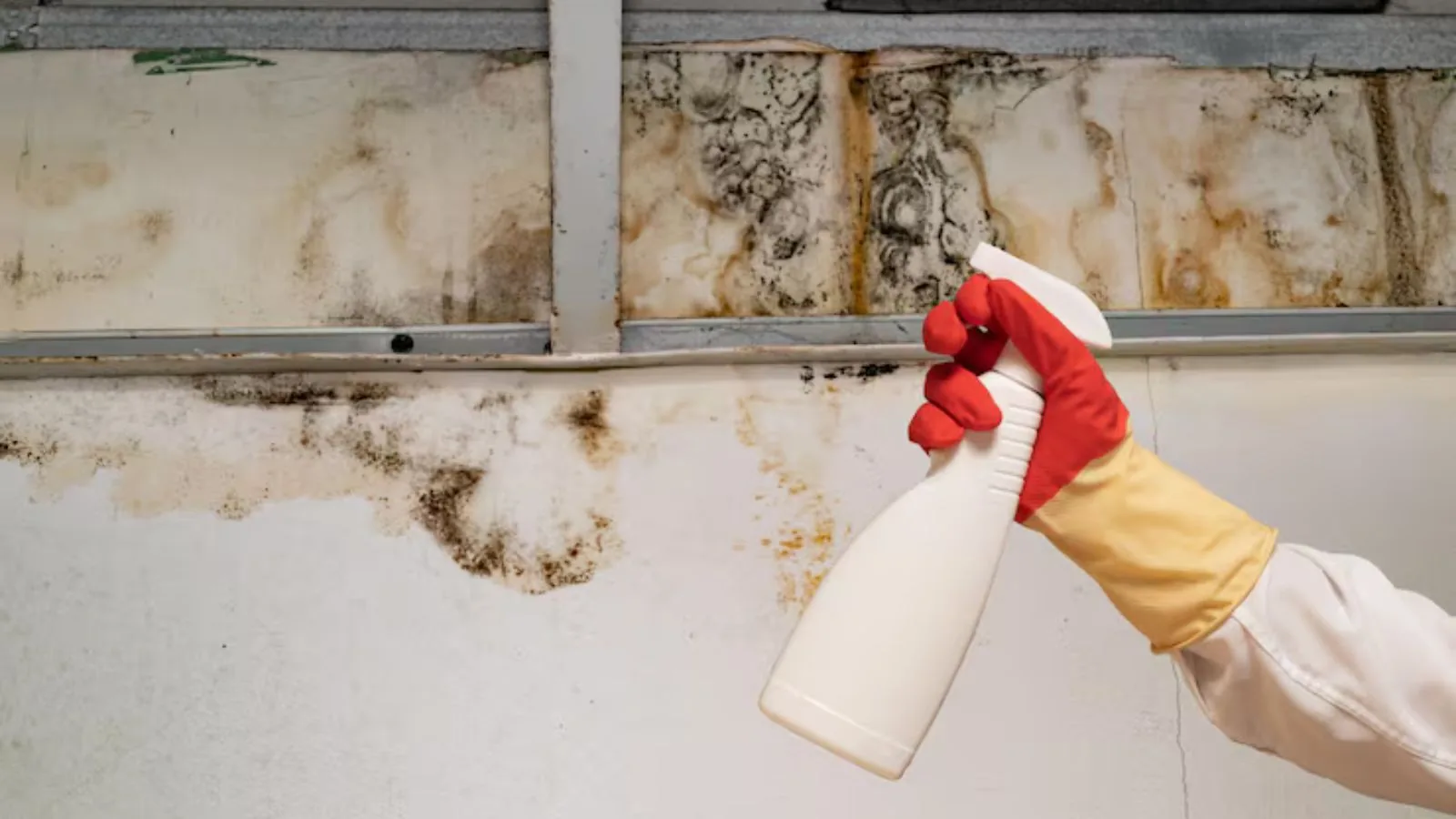
Mold usually follows water that stayed too long, in a wall, under flooring or in a basement. If you see growth or smell a musty odor, avoid disturbing it, keep the area closed, and call our dispatch line. Do not bleach it or run fans over it. Call (833) 521-1033 and describe what you see and where.
Mold remediation here means removing mold and fixing the moisture condition that fed it. We follow the ANSI/IICRC S520 standard for mold remediation. If the cause is an active leak, a plumber or roofer fixes it, and we handle the drying and removal.
Why mold appears after water damage
Mold needs moisture, a food source and time. Drywall paper, wood, insulation and carpet pad are all food. Once materials stay wet for a day or two in warm conditions, growth can start.
That is why fast drying matters. Structural drying is the strongest prevention, and it is the step that should come before any mold removal.
- Fuzzy, spotted or stained patches on walls, ceilings or baseboards.
- A musty odor that returns after cleaning.
- Warped or discolored drywall and trim.
- Visible growth on the underside of carpet or pad.
Removing mold is not the same as fixing the moisture
Removing mold without fixing the moisture is a short-term cure. Growth returns when the same water keeps arriving. The first step is finding where the moisture comes from and stopping it.
Hidden sources include slow plumbing leaks, roof and flashing problems, condensation on ducts, and groundwater seepage. Basement water damage cleanup and AC leak water damage are common starting points.
| Where mold appears | Likely moisture source | What to check |
|---|---|---|
| Basement walls | Seepage or humidity | Drainage, sump pump, dehumidifier |
| Ceiling | Roof or upstairs leak | Roof, flashing, plumbing above |
| Under a sink or appliance | Supply or drain leak | Fittings and hoses |
| Around vents or ducts | Condensation or AC leak | Drain pan and condensate line |
See or smell mold?
Leave it alone and call us.
How removal works
Containment and HEPA air scrubbers matter because disturbing mold releases spores. Cleaning without containment can spread the problem to clean rooms.
- 1
Contain
Seal the area with barriers and use negative air machines so spores do not spread.
- 2
Remove
Take out materials that cannot be cleaned, such as moldy drywall and insulation.
- 3
Clean
HEPA vacuum and wipe surfaces, then apply treatment as needed.
- 4
Verify
Check that moisture readings are dry and growth is gone.
Testing, safety and what we do not do
Testing can show what is present, but visible mold is usually enough to justify removal. If you have health concerns, talk to your doctor. We do not diagnose illness or promise health outcomes.
Small surface spots on a bathroom tile are a household cleaning job. Larger or hidden growth, or growth after water damage, is a job for trained crews.
What you can do while you wait
Keep the area closed off and keep the air handler from pulling air through it. Do not sand, scrub dry or spray the growth, because that spreads spores. Turn on a dehumidifier in the room if humidity is high.
Write down where you see growth, when you first noticed it and any past leaks nearby. Photograph it. If anyone at home has asthma, allergies or a weakened immune system, tell the crew and your doctor.
What to do and what not to do around mold
Treat visible growth as something to leave alone until a plan is in place. Disturbing it releases spores.
- Do not use a fan to blow across the growth.
- Do not touch it with bare hands or sweep it dry.
- Close the door to the room and turn the air handler off if you can.
- Wear an N95 respirator if you must enter.
What Shapes The Cost
Mold jobs vary with the area, the materials and how hidden the growth is.
- Area and hidden growthGrowth behind walls and under flooring adds scope.
- Materials removedDrywall, insulation and pad are often replaced.
- Containment and air filtrationBarriers and negative air equipment are part of the work.
- Moisture source repairA plumber or roofer fixes the source separately.
- Rebuild scopeReplacing removed materials is separate.
Many policies cover mold only when it follows a covered water loss, and some cap it. Read your policy and ask your insurer.
Common Questions
Can I kill mold with bleach?
Bleach does not penetrate porous materials, and it can leave moisture. Removal and drying are more reliable.
Does every water loss lead to mold?
No. Fast, thorough drying prevents most of it.
Do I need mold testing?
Visible growth usually justifies removal without testing. Testing can help in some cases, and a professional can advise.
Mold remediation in our area
We serve West Chester Township, ZIP codes 45069 and 45071, and Cincinnati. Mold calls often begin as basement water damage or crawl space water damage.
To understand how moisture is measured and dried, see structural drying and dehumidification.