
Wet carpet is not always ruined. Clean water caught early can often be extracted and dried in place, while contaminated water means replacement. Stop the source, lift furniture onto blocks, and call our dispatch line. Do not walk on soaked carpet more than you have to. Call (833) 521-1033 and tell us where the water came from.
Carpet water damage restoration covers wall-to-wall carpet, area rugs and the pad and subfloor beneath. Hard floors are covered in hardwood floor water damage repair, and a flooded lower level is covered in basement water damage cleanup.
Carpet, pad and subfloor are three problems
The carpet fibers dry quickly, the backing holds water longer, and the pad acts like a sponge. Underneath, the subfloor can stay wet for days even after the carpet feels dry.
That is why extraction comes first. Removing as much water as possible before drying cuts the time and the risk of odor and mold.
- Carpet face fibers and backing.
- Pad, which absorbs a large share of the water.
- Tack strips and baseboards at the edges.
- Subfloor or slab beneath.
When carpet can be saved
Whether carpet is saved depends mostly on the water category and the time it sat. Clean water from a supply line often allows drying in place, sometimes with the pad replaced. Gray water sits in a gray zone. Sewage or flood water means carpet and pad are removed.
If the carpet is lifted to dry the pad or subfloor, it can often be re-stretched and reinstalled when it is clean.
| Water source | Typical category | Carpet outcome |
|---|---|---|
| Supply line or tank | Category 1 | Often dried in place, pad may be replaced |
| Washer or dishwasher discharge | Category 2 | Case by case, pad usually replaced |
| Rain or groundwater | Category 2 or 3 | Often replaced if it sat |
| Sewage or flood | Category 3 | Carpet and pad removed |
Carpet soaked?
Call us before the pad holds the water for days.
The drying process
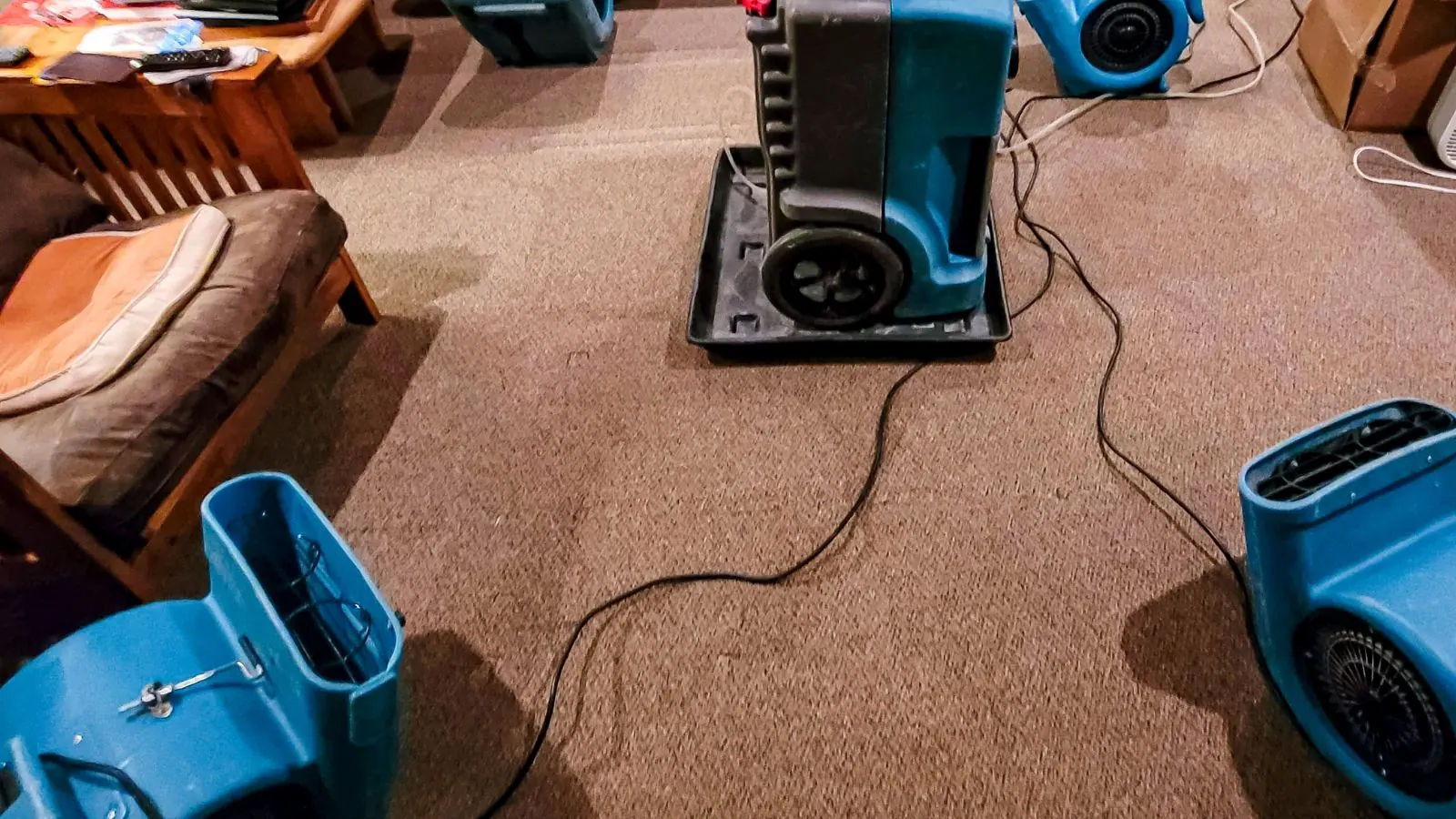
After extraction, the crew lifts a corner of the carpet, removes or dries the pad, and places air movers and dehumidifiers. Moisture readings in the subfloor show when it is dry.
Odor is an early signal. Carpet that smells musty after a few days is likely holding moisture, and the cause should be found before mold sets in.
Preventing mold in wet carpet
Mold can begin in a day or two in warm, damp conditions. Drying quickly is the strongest defense. If growth is already present, see mold remediation for what testing and removal involve.
Keep the area ventilated and avoid covering damp carpet with rugs or furniture. If wet carpet has to stay for a short time, lift furniture onto blocks.
Odor, stains and what to expect after drying
Even when carpet is saved, it can keep a faint odor for a few days while the pad and subfloor finish drying. A deep clean after drying removes residue, and any lingering smell is a signal to check readings again.
Stains depend on the water. Clean water rarely leaves marks, while dirty water can leave tide lines that need cleaning or patching. If a section has to be replaced, matching dye lots and pile height can be the hardest part of the repair, so ask about it early.
What to do before the crew arrives
Stay off soaked carpet as much as you can, because walking on it pushes water into the pad and spreads dirt.
- Do not use a household vacuum on wet carpet.
- Block furniture legs with foil or plastic so wood does not stain the fibers.
- Open windows if the weather allows, and run air conditioning rather than heat.
- Photograph the wet areas first.
What Shapes The Cost
Carpet jobs depend on the water source, how long the carpet stayed wet, and whether the pad can be reused.
- Water categoryClean water often allows drying, while contaminated water means removal.
- Time wetHours versus days affects odor and mold risk.
- AreaSquare footage sets extraction and equipment needs.
- Pad and subfloorPad is often replaced even when carpet is saved.
- Replacement and installationNew carpet is a separate scope.
Ask your insurer how carpet and pad are treated under your policy. Keep a sample of the carpet and photos before anything is removed.
Common Questions
Can wet carpet always be saved?
No. Contaminated water or long wet time usually means replacement. Clean water caught quickly often allows drying.
Do I need to replace the pad?
Often yes. Pad absorbs a lot of water and can be hard to dry.
How soon should I call?
As soon as you notice it. Each day wet increases the odor and mold risk.
Carpet calls in our area
We serve West Chester Township, ZIP codes 45069 and 45071, and Cincinnati. Carpet often gets wet from water heater leaks and appliance leaks.
For how subfloors are dried, see structural drying.