
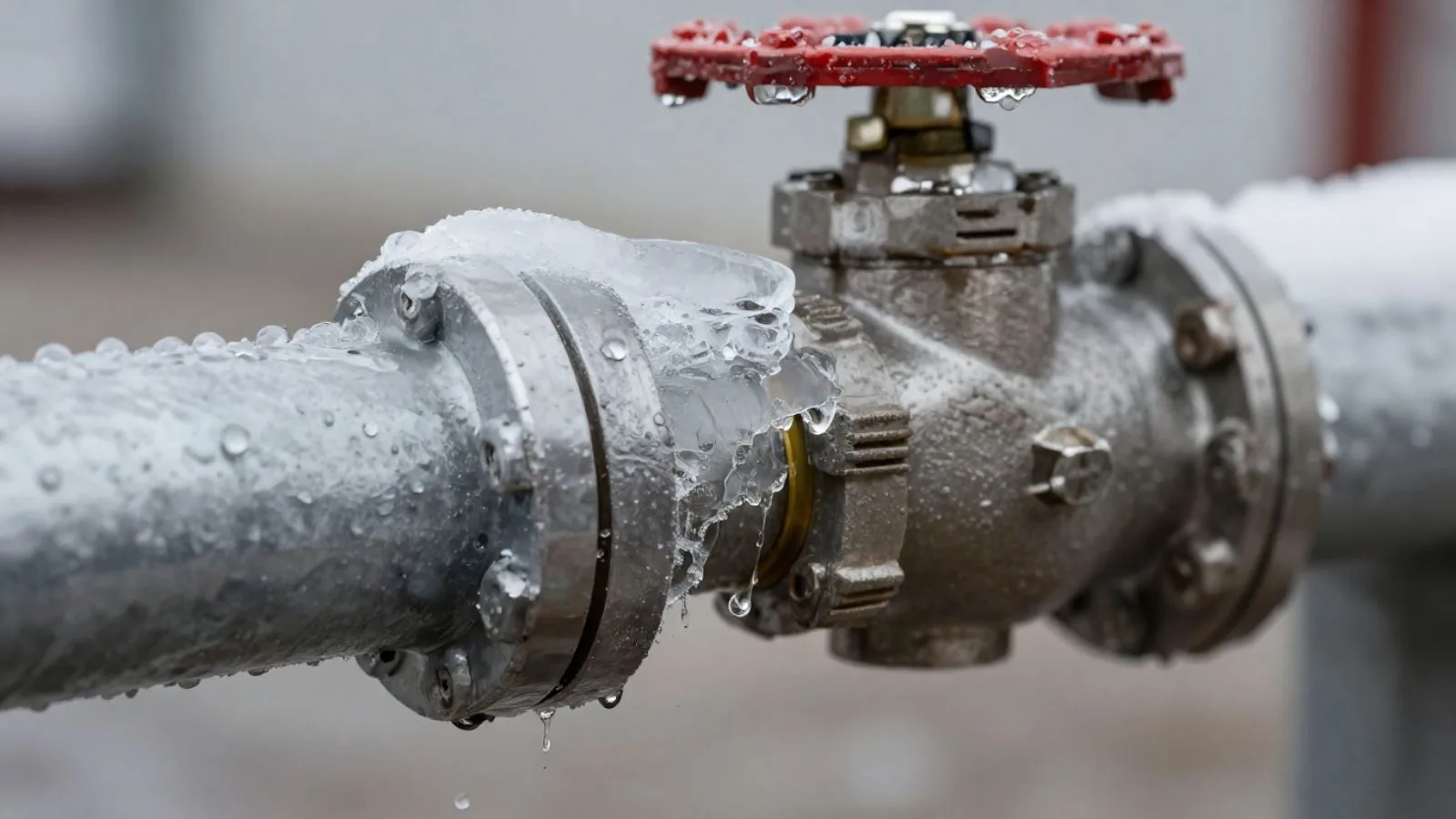
A frozen pipe often looks harmless until the ice melts and the split starts to pour. If water appears after a cold snap, treat it as an emergency, shut off the main valve and call our 24/7 dispatch line. Keep the heat on, open cabinet doors under sinks, and stay out of any wet area where outlets could be live. Call (833) 521-1033 once the water is stopped.
Frozen pipe water damage starts from ice rather than from a sudden pressure failure. If your pipe split without freezing, the source is a different problem and burst pipe water damage fits better. This page is about the thaw, the split, and the drying that follows.
Why the damage appears at thaw
When water freezes inside a pipe it expands, and the pressure builds between the ice blockage and the closed faucet downstream. The pipe can crack at that spot long before anything leaks, because the ice is still plugging the hole.
The leak starts when the ice melts. That is why a house can sit quietly through a cold night and flood in the afternoon, or flood while a family is away. Pipes in exterior walls, unheated garages, attics and crawl spaces are the usual victims.
- Frost or ice visible on exposed pipe.
- A faucet that gives a trickle or nothing at all in freezing weather.
- A new stain, bubble or damp patch on a wall or ceiling after temperatures rise.
- The sound of running water when every fixture is off.
Frozen pipe emergency: what to do while you wait
Close the main shutoff first. Then open the faucet nearest to the damaged pipe so remaining water can drain. Do not use a torch or open flame to thaw a pipe, which can start a fire inside a wall.
If a pipe is still frozen and not yet leaking, a hair dryer on low or warm towels can help, working from the faucet side toward the blockage. If you do not know where the freeze is, call a plumber and keep the heat on.
Water showing after a freeze?
Shut the main, then call the 24/7 dispatch line.
The drying work after a split pipe
Water from a thawed pipe is usually clean at the start, which gives more chance to dry materials in place instead of replacing them. Fast action matters because insulation and drywall hold moisture long after the surface feels dry.
The crew extracts standing water, opens the wall or ceiling where readings call for it, and sets air movers and dehumidifiers. Thermal imaging helps trace where water traveled inside the cavity before any cutting begins.
| Stage | What happens | Why it matters |
|---|---|---|
| Stop | Main valve closed, break located | Drying cannot finish while water is still entering |
| Extract | Standing water removed | Less water left to soak into framing |
| Open | Wet drywall or insulation cut out where needed | Trapped insulation stays wet for days |
| Dry | Air movers and dehumidifiers run with daily readings | Readings show when the structure is actually dry |
Honest note on how common this is in West Chester
West Chester sits in southwest Ohio, where winter freeze and thaw cycles do occur, but we are not quoting a local frequency here. For freeze-day numbers, the National Weather Service Wilmington, Ohio office publishes climate data for the region.
Whatever the frequency, the weak points are the same everywhere: pipes in outside walls, in unheated garages and crawl spaces, and near attic eaves. Insulation, heat tape installed by a plumber, and keeping the thermostat steady when you travel all reduce the risk.
What Shapes The Cost
Frozen pipe losses range widely because the split may be in one wall or in several. Cost follows how long water ran after the thaw and what it reached.
- Thaw timingWater that ran for minutes costs less than a leak that ran while the house was empty.
- Number of splitsFreeze damage can crack more than one point along the same run.
- Insulation and drywallWet insulation often must come out because it holds water.
- Drying equipment daysCold structures dry more slowly, which can extend equipment time.
- Rebuild scopeDrywall, paint and trim after drying are scoped and priced separately.
Freeze damage is a common homeowners claim, but coverage can depend on whether the home was heated and maintained. Ask your insurer before you decide how to proceed.
Common Questions
Do you handle frozen pipe emergencies at night or on weekends in West Chester?
Yes. Hard freezes often cause trouble at night and on weekends, and our dispatch line is open 24/7. If the thaw has started and water is moving, shut the main and call right away.
Can I thaw a frozen pipe myself?
A hair dryer or warm towels work on an exposed pipe if it is not yet leaking. Never use a torch or open flame, and call a plumber if you cannot find the frozen section.
Why did the pipe leak only after it warmed up?
The ice acts as a plug. Once it melts the crack underneath opens and water flows through.
Does thawed pipe water count as clean water?
It usually starts as clean supply water, but it picks up contaminants as it sits in insulation and building materials, which is why quick drying matters.
Coverage for freeze calls
Frozen pipe calls come from West Chester Township, including ZIP codes 45069 and 45071, and from Cincinnati. If the water traveled to a lower floor, ceiling water damage repair and basement water damage cleanup explain what happens below the break.
A cold crawl space is a common freeze point, so crawl space water damage is worth a read as well.