
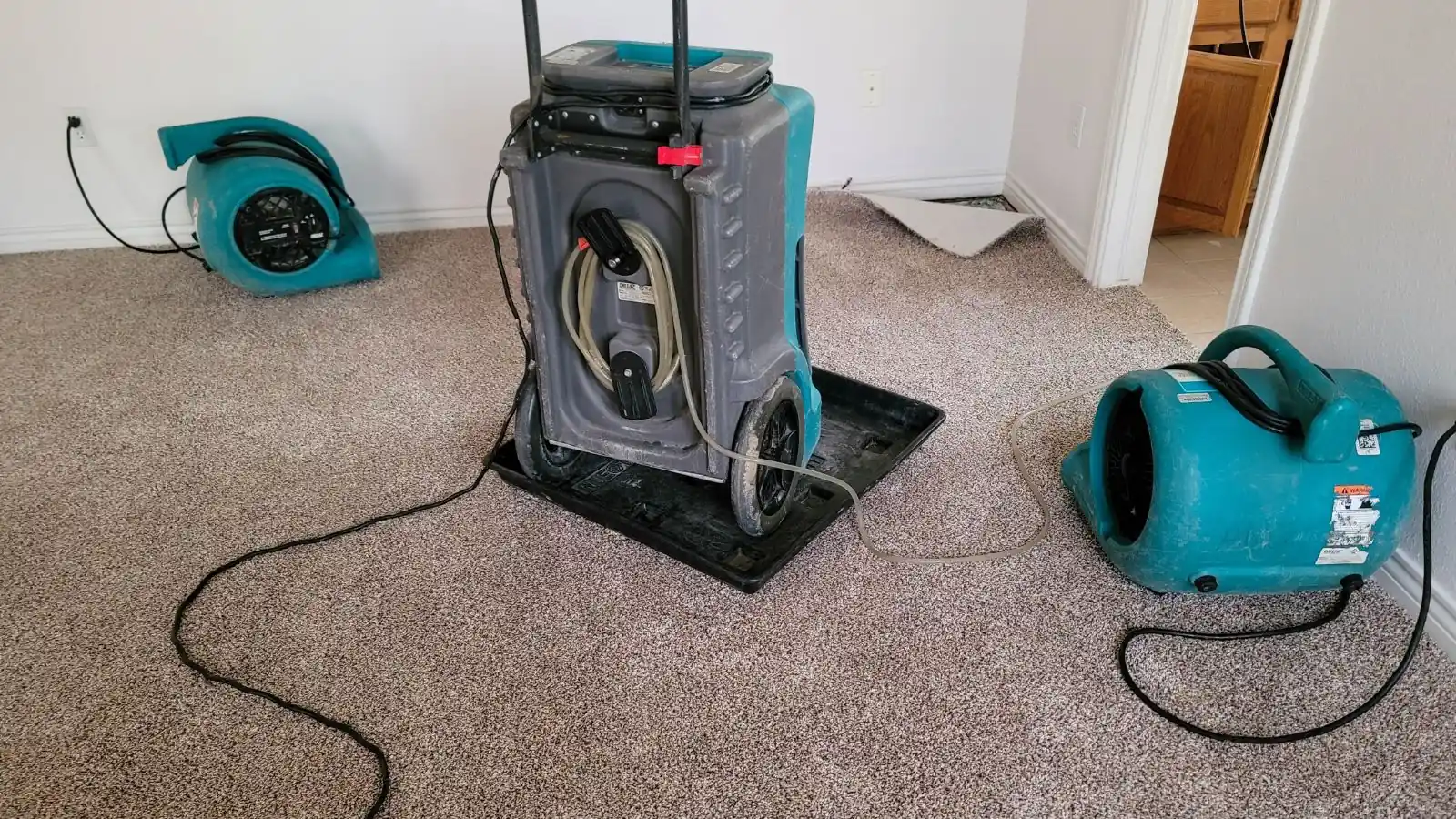
Structural drying is the stage after standing water is removed. Walls, floors, ceilings and framing still hold moisture that you cannot see, and drying them takes air movement, dehumidification and daily checks. Call our dispatch line and tell us what got wet. Call (833) 521-1033 and describe the damage.
This is different from water extraction, which removes standing water. It also differs from repair, which comes after drying. Our crews follow the ANSI/IICRC S500 standard for water damage restoration, which describes how drying is planned and verified.
Why drying needs more than fans
Fans move air across a wet surface, but they do not remove water from the room. Without dehumidification, the moisture just moves from the walls into the air and settles back. Drying works when equipment pulls moisture out of the air and out of the building.
Psychrometrics, the science of air and moisture, drives equipment choices. Temperature, relative humidity and the amount of moisture in the air determine how fast materials can release water.
- Air movers push dry air across wet surfaces and into cavities.
- Dehumidifiers remove moisture from the air so materials can keep releasing water.
- Moisture meters and thermal imaging show where water is and when it is gone.
- Daily readings are logged so drying ends on data, not guesswork.
The four classes of water loss
The S500 standard sorts losses by class, which describes how much of the structure absorbed water and how fast drying is likely to go.
Class 1 affects a small area with low-absorbing materials. Class 2 affects a whole room with carpet and wall wicking. Class 3 comes from overhead water that soaks ceilings, walls and floors. Class 4 involves dense, low-porosity materials that dry very slowly.
| Class | Typical situation | Drying implication |
|---|---|---|
| Class 1 | Small area, low-absorbing materials | Least moisture, quickest drying |
| Class 2 | Room-wide with carpet and wall wicking | More moisture, standard equipment plan |
| Class 3 | Overhead water through ceilings and walls | Highest evaporation load |
| Class 4 | Dense materials like hardwood, concrete or plaster | Specialty drying and longer time |
Walls or floors still wet?
Call us and describe what got wet.
When the air feels dry but the structure is not
The surface of a wall can feel dry while the framing and insulation behind it stay wet. This is the solution-gap problem, because the visible symptom has ended while the cause of mold and rot is still present.
A moisture meter reading against a dry reference for the same material tells you whether it is dry. If the numbers are still high, the wall is not dry, no matter how it looks.
What a monitoring visit looks like
Each visit logs temperature, humidity and moisture content. The log shows whether drying is progressing and gives you records for an insurer if you file a claim.
- 1
Check readings
Moisture meters and thermal imaging at the same spots each visit.
- 2
Adjust equipment
Move or add air movers and dehumidifiers based on the readings.
- 3
Sign off
Stop when materials reach dry standards, not before.
What to do while equipment is running
Drying equipment works best in a closed space, so a few habits help the job go faster.
- Do not unplug or move air movers and dehumidifiers.
- Keep exterior doors and windows closed unless the crew says otherwise.
- Do not turn the thermostat down to save energy.
- Tell the crew if a breaker trips or a machine sounds wrong.
What Shapes The Cost
Drying costs follow the size of the wet area, the materials involved and how long equipment needs to run.
- Class of water lossHigher classes mean more moisture and longer drying.
- Area and materialsSquare footage and material type set the equipment count.
- Equipment daysAir movers and dehumidifiers run until readings reach dry standards.
- Access to cavitiesWalls, ceilings and floors may need openings to dry.
- Monitoring visitsDaily readings are part of the scope.
Insurers often ask for drying logs and moisture readings. Keep copies of the records and ask your adjuster what documentation they want.
Common Questions
How long does drying take?
It depends on the class of loss, the materials and the conditions. Readings, not a calendar, decide when it is done.
Can I use my own fans and a dehumidifier?
Household equipment helps with small, clean losses. It rarely handles wet cavities and dense materials.
Why do you come back each day?
Readings show whether drying is working. Equipment is adjusted or removed based on those numbers.
Where we dry structures
We serve West Chester Township, ZIP codes 45069 and 45071, and Cincinnati. Drying often follows burst pipe water damage, flood damage cleanup or basement water damage cleanup.
If readings show moisture has reached the point of mold risk, mold remediation explains the next step.