
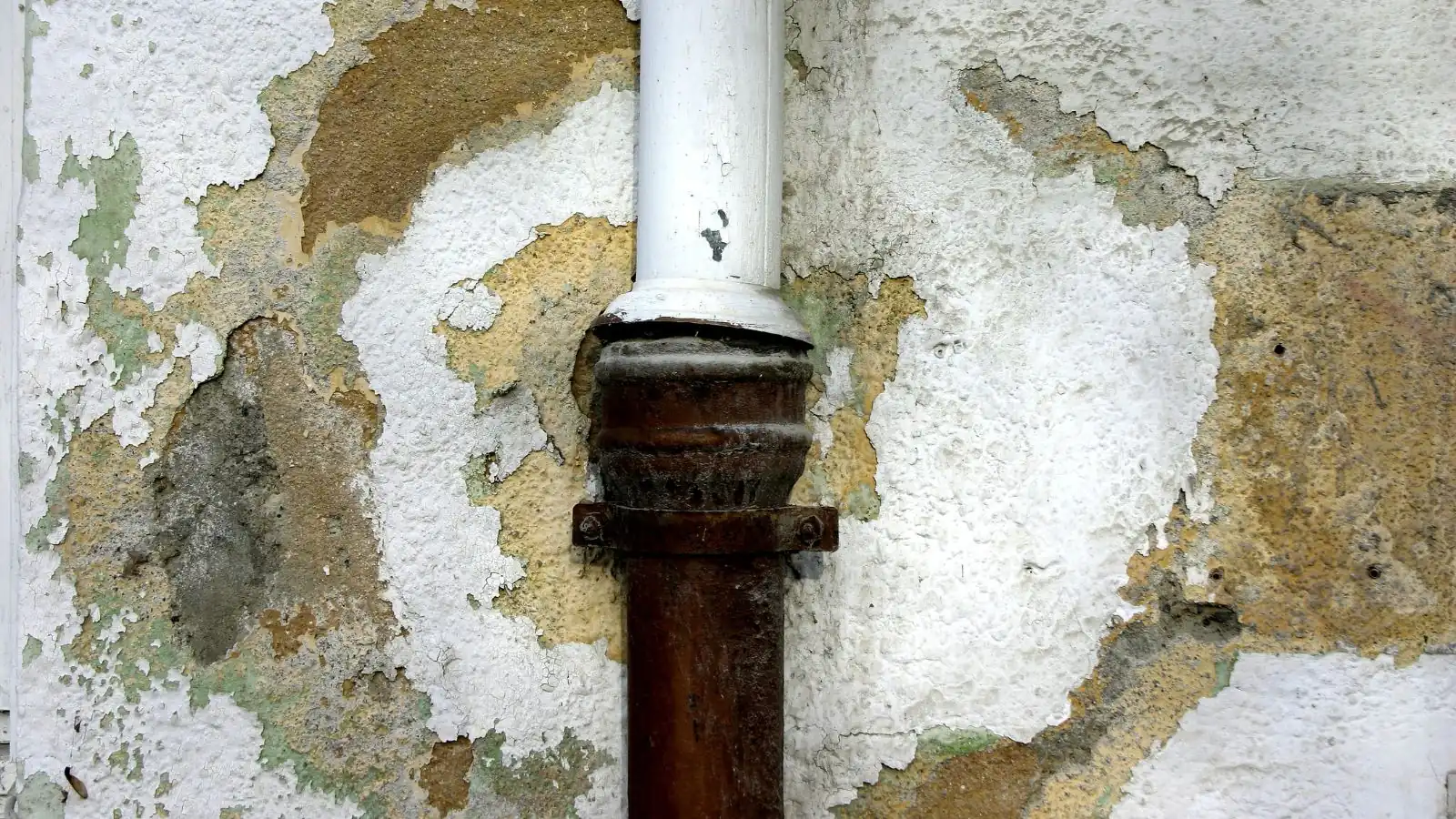
Drywall wicks water upward, softens, stains and grows mold if it stays wet. If a wall is bubbling, stained or soft to the touch, find and stop the source and call our dispatch line. Do not paint over it. Call (833) 521-1033 and tell us how large the damage is.
Wall and drywall water damage repair covers the cavity behind the wall, the insulation inside it, and the finish on the outside. Water from above is covered in ceiling water damage repair, and a pipe failure inside a wall is covered in burst pipe water damage.
What water does to drywall
Gypsum board is made of paper and gypsum, and both absorb water. Wet drywall softens, loses strength and can sag or crumble. The paper facing is food for mold if the wall stays damp.
Water travels up the wall by wicking, often higher than the wet area you can see. Baseboards, paint and wallpaper may hide moisture.
- Bubbling or peeling paint and wallpaper.
- Stains that spread or darken.
- Soft, crumbly or bulging drywall.
- A musty smell near the wall.
Dry it or cut it out
Not every wet wall has to come out. Clean water caught quickly can sometimes be dried in place, with small holes drilled at the base to let air reach the cavity. Walls that are saturated, sagging or wet with contaminated water are cut out.
A flood cut removes drywall a set height above the water line, so the framing and insulation behind it can dry. Moisture readings decide how high to cut.
| Condition | What it usually means | Typical path |
|---|---|---|
| Slightly damp, firm, clean water | Surface wet, cavity likely damp | Dry in place with readings |
| Soft, sagging or crumbling | Drywall has lost its strength | Cut out and replace |
| Contaminated water contact | Porous materials can't be cleaned | Remove and replace |
| Mold on the surface | Moisture has lingered | Remove and treat the source |
Wall bubbling or soft?
Find the source and call us before mold starts.
Insulation and framing behind the wall
Insulation holds water like a sponge, and fiberglass batts that stay wet lose their value. Framing is usually dried and cleaned, and treated if mold is present.
Opening the wall also lets us check wiring and plumbing. If a pipe failed inside the cavity, the plumber needs access before the wall is closed.
Repair after drying
When readings show the framing and remaining drywall are dry, new drywall is hung, taped, textured to match and primed. A stain-blocking primer helps keep old marks from bleeding through.
Paint matching can be the hardest part. If a full wall needs painting for an even look, that is explained in the scope before work begins.
How to tell the repair is complete
A finished repair has no soft spots, no staining that bleeds through the paint and no musty smell. Joints between old and new drywall should be smooth and hard to find under the paint.
Ask for the final moisture readings before the wall is closed, and keep a copy. If a stain returns after painting, moisture is still reaching the wall from somewhere, and the source needs another look.
What to do before the crew arrives
Do not drill, cut or press on a wall that may hold water, and do not paint over a stain.
- Do not touch outlets or switches on a damp wall.
- Move furniture away from the wall.
- Remove pictures and shelves so the wall can be opened if needed.
- Photograph the stain and mark its edge lightly in pencil to see if it grows.
What Shapes The Cost
Wall repairs depend on how far the water spread and whether drywall can be dried or must be replaced.
- Water source and categoryClean versus contaminated water changes the approach.
- Wall height affectedWicking can carry moisture well above the water line.
- Insulation behind the drywallWet insulation is usually replaced.
- Drying equipment daysCavities may need targeted drying.
- Texture and paint matchingFinishing is a separate part of the scope.
Insurers may ask for photos taken before the wall is opened. Photograph the damage and the moisture readings, and ask your adjuster what they require.
Common Questions
Can I just paint over a water stain?
Painting over moisture traps it and can hide mold. Fix the source, dry the wall, and then use a stain-blocking primer.
How do I know if the wall is still wet?
A moisture meter tells you. Touch alone is unreliable.
Will you match the texture?
Matching is part of the repair scope, and results depend on the existing texture.
Wall repair in our area
We serve West Chester Township, ZIP codes 45069 and 45071, and Cincinnati. If a pipe caused the damage, see frozen pipe water damage or burst pipe water damage.
Persistent moisture can lead to growth, so mold remediation explains the next step.