
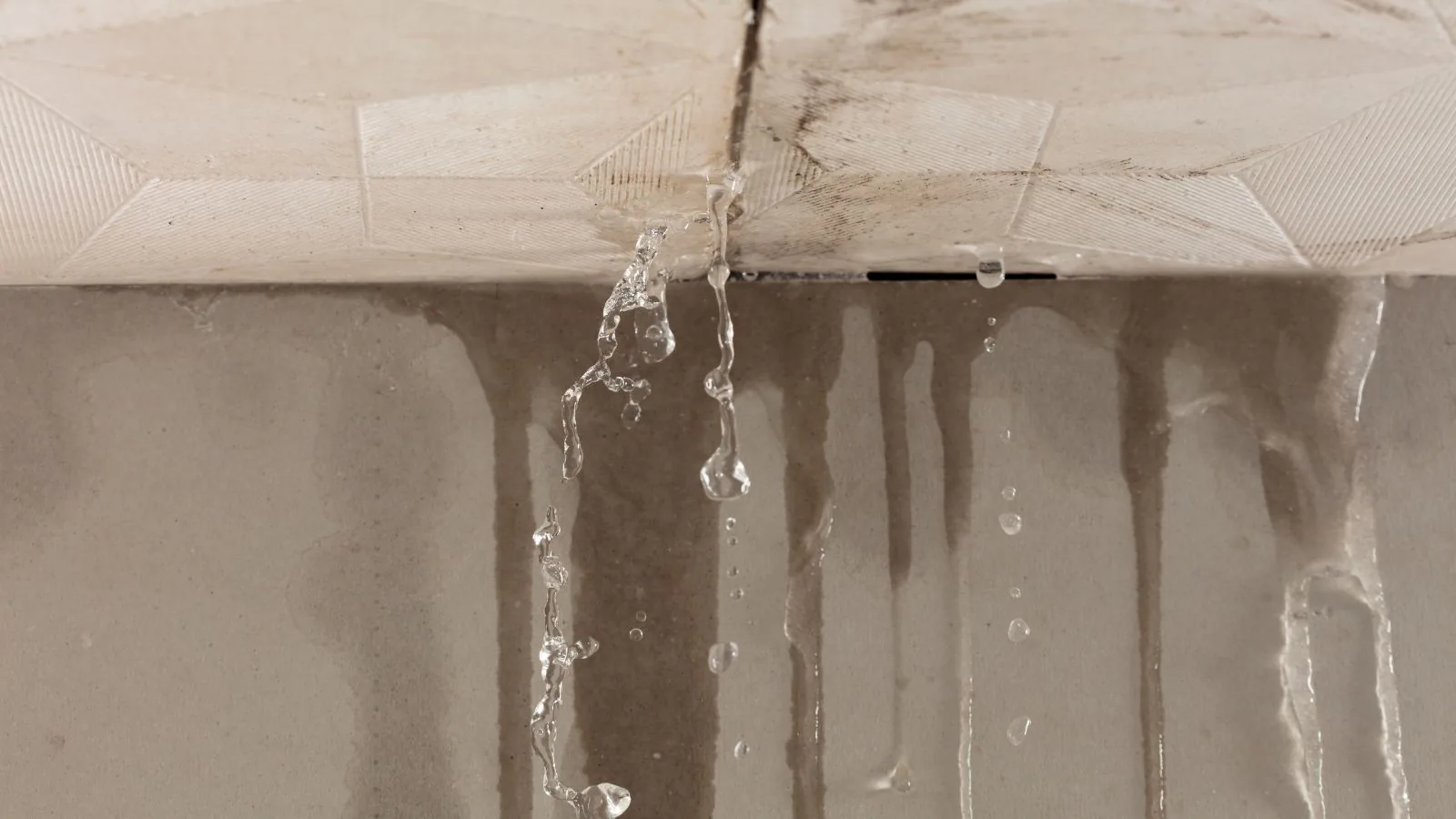
After a storm, water gets in through places you do not expect: damaged shingles, flashing, windows, vents and doors. Call our 24/7 dispatch line, stay away from downed power lines, and cover openings if you can do so safely. Photograph the damage before you move anything. Call (833) 521-1033 and describe where the water entered.
Storm water damage is rain-driven water that enters a building through the envelope. Rising creek or surface water is handled under flood damage cleanup. Water that came through the ceiling is covered in ceiling water damage repair.
When storm water inside is an emergency: how it gets in
Wind lifts shingles, and heavy rain finds the gap. Hail bruises roofing and cracks skylights. Wind-driven rain pushes through window seals and under door thresholds, and fallen limbs puncture roofs and walls.
Damage is often hidden. Water can run down inside a wall or sit in attic insulation for days before a stain appears on the ceiling.
- Missing or lifted shingles and damaged flashing.
- Windows, skylights and doors with failed seals.
- Gutters and downspouts that overflow against the wall.
- Fallen branches or debris that open the roof or siding.
Temporary protection and safe steps
If you can safely do so, cover the opening with a tarp or plastic sheeting to limit more rain. Do not climb on a wet or damaged roof. Call a roofer for temporary roof protection and a restoration crew for the interior.
Stay out of rooms with sagging ceilings and keep clear of areas where water meets electrical fixtures. Downed lines outside are an emergency for the utility and 911.
Hazards after a storm
Never touch or approach downed power lines. Assume water near electrical panels and outlets is live until an electrician says otherwise.
Storm water inside?
Stay safe, then call the 24/7 line.
What the interior cleanup includes
Crews extract standing water, remove wet insulation and drywall where needed, and dry the structure with air movers and dehumidifiers. Moisture readings confirm which materials can stay and which have to go.
Rain water is usually treated as Category 2, because it picks up dirt from roofs and gutters on the way in. That affects how porous materials are handled.
| Where water entered | What gets wet | What the work involves |
|---|---|---|
| Roof or attic | Insulation, ceilings, upper walls | Remove wet insulation, dry cavities |
| Windows and doors | Frames, walls, flooring near the opening | Extract, dry, check wall cavities |
| Walls and siding | Wall insulation and drywall | Open cavity where readings call for it |
| Gutters and downspouts | Foundation edge, basement walls | Extract, dry and address the water path |
Documenting storm damage for an insurer
Photos taken before cleanup matter. Take wide shots and close ones, and note dates and times. Keep any damaged materials you remove until your adjuster has seen them or approved disposal.
Many policies treat wind and hail damage differently from flood. Read your policy and ask your agent which parts apply. We provide drying logs and moisture readings with the scope.
What Shapes The Cost
Storm jobs depend on how many openings the storm created and how long water got in before it was stopped.
- Number of entry pointsSeveral openings spread water to more rooms.
- Time before protectionHours of open roof soak more than a quick tarp.
- Insulation and drywallWet attic and wall insulation often must be replaced.
- Drying equipment daysMore wet cavities mean longer drying.
- Roof and exterior repairA roofer repairs the envelope, which is a separate scope.
Storm coverage often depends on the cause, such as wind versus flood. Ask your insurer which applies and photograph everything first.
Common Questions
Do you handle storm water damage emergencies at night or on weekends in West Chester?
Yes. Storms do not follow a schedule, and our dispatch line is open 24/7 including nights and weekends. Call, describe where the water entered, and we will explain what to do first.
Should I tarp the roof myself?
Only if it is safe. A roofer is better equipped, and standing on a wet roof is dangerous.
Is rain water clean?
It starts clean but picks up dirt and debris from roofs and gutters, so it is generally treated as Category 2.
Do you repair the roof?
No. A roofer repairs the roof. We dry and restore the interior.
Where we respond after storms
We serve West Chester Township, ZIP codes 45069 and 45071, and Cincinnati. If water reached a lower level, see basement water damage cleanup.
Attic and wall insulation drying is explained in structural drying.