
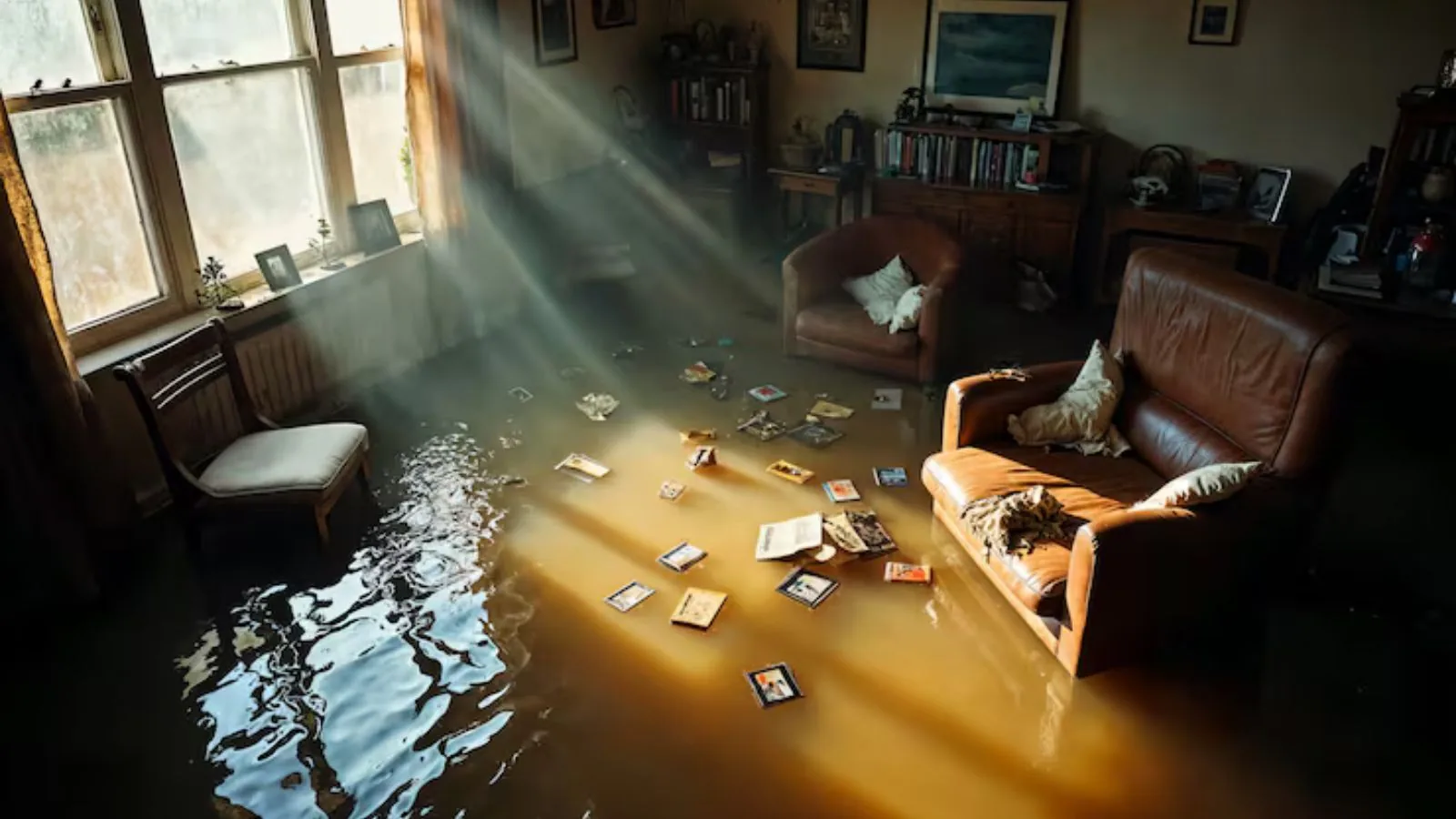
After water damage, the hardest part is often deciding what to keep. Some items can be cleaned and saved, and others carry a risk that is not worth taking. Two questions do most of the sorting: where did the water come from, and what is the item made of?
This guide gives general rules, not a promise about any particular item. If the water was sewage or flood water, call (833) 521-1033 before handling anything. Photograph items before you throw them away, since your insurer may ask.
Start with the water category
Clean water from a supply line is the easiest case. Gray water from a washer or dishwasher carries soap and soil. Black water from sewage or flood water carries bacteria and is the hardest. The ANSI/IICRC S500 standard uses these categories.
As a rule, hard, non-porous items from clean or gray water can usually be cleaned. Porous items exposed to contaminated water are usually discarded.
- Clean water: most items can be dried and saved if caught quickly.
- Gray water: clean and disinfect hard items, be cautious with porous ones.
- Black water: discard porous items, clean hard ones carefully.
- Anything with mold growth: handle with protection or leave to a professional.
Sorting by material
Solid wood furniture often survives clean water if it is dried slowly. Upholstered furniture soaked in contaminated water is usually discarded. Particleboard furniture swells and loses strength and rarely recovers.
Clothing and washable fabrics from clean or gray water can usually be laundered. Mattresses and pillows soaked with any water that sat for days are usually discarded.
| Item | Clean water | Contaminated water |
|---|---|---|
| Solid wood furniture | Often dried and kept | Cleaned if hard surfaces, case by case |
| Upholstered furniture | Maybe, if dried quickly | Usually discarded |
| Particleboard furniture | Often swells, replace | Discard |
| Washable clothing | Launder | Launder hot or discard |
| Mattress or pillows | Discard if soaked long | Discard |
| Hard toys and dishes | Wash and sanitize | Wash and sanitize, or discard |
Not sure what is safe to keep?
Call and describe the items and the water.
Food, medicine and personal care
Throw away food, drinks and medicine that touched floodwater or sewage, including items in packaging that cannot be sealed or disinfected. Canned goods with intact seals can sometimes be cleaned, but check with a food safety source.
When in doubt, throw it out. Safety matters more than the cost of replacing a few items.
Contents pack-out and professional cleaning
A restoration company can move contents out of the work area, clean them and store them while the structure dries. This is called pack-out, and it protects belongings from further damage and from dust and equipment.
Valuable or sentimental items may be worth professional cleaning. Ask what can be restored and what the limits are before you commit.
Recording what you keep and what you discard
A written list helps with insurance and with your own memory. Note each item, its approximate age, where it was and whether you cleaned it or discarded it. Photograph it before it goes.
Keep the list in a single file, and add to it as you find more. Bulky items such as sofas and mattresses are easy to forget when you tally the loss later.
- Item name and approximate age.
- Room where it was.
- Condition and what happened to it.
- Photo before disposal.
Handling items safely while you sort
Wear gloves, closed shoes and, for mold or contaminated water, a respirator. Do not carry soaked items through clean rooms if you can avoid it, because dirty water drips and spreads.
Use sturdy bags for wet items, and separate hard items to be cleaned from soft items to be discarded. Wash your hands well after sorting.
When pack-out is worth considering
If a room needs heavy demolition or drying, moving contents out protects them and gives crews room to work. Pack-out is also useful when you are staying away from the home during the job.
Ask what is included, such as inventory, cleaning and storage, and how items are tracked. A written inventory protects you if something goes missing.
- Inventory with photos.
- Cleaning of salvageable items.
- Storage during the job.
- Return and placement after drying.
Sorting belongings in West Chester
If you live in a managed community or an apartment, check with your property manager about where wet items can go. Large bulky items often need a special pickup.
Butler County and West Chester Township publish waste and recycling information for residents. Ask the township about bulk item disposal rules before you stack damaged furniture at the curb.
Common Questions
Should I keep damaged items until the adjuster visits?
Photograph them first. If your insurer wants to inspect something, keep it. Ask before disposal.
Can mattresses be saved?
Usually not if they soaked through, since they dry slowly inside and can grow mold.
What about electronics?
Do not power them on. Unplug and have a professional assess them. See our guide to water-damaged electronics.
Who handles bulk trash pickup in West Chester?
Ask the township or your waste hauler about bulk items. Rules vary, and wet furniture may need special handling.
Next steps
If water is still in the home, see water extraction and carpet water damage restoration. For contaminated water, read sewage backup cleanup.
We also serve Cincinnati and neighborhoods such as Beckett Ridge. See our Cincinnati page for local coverage.