
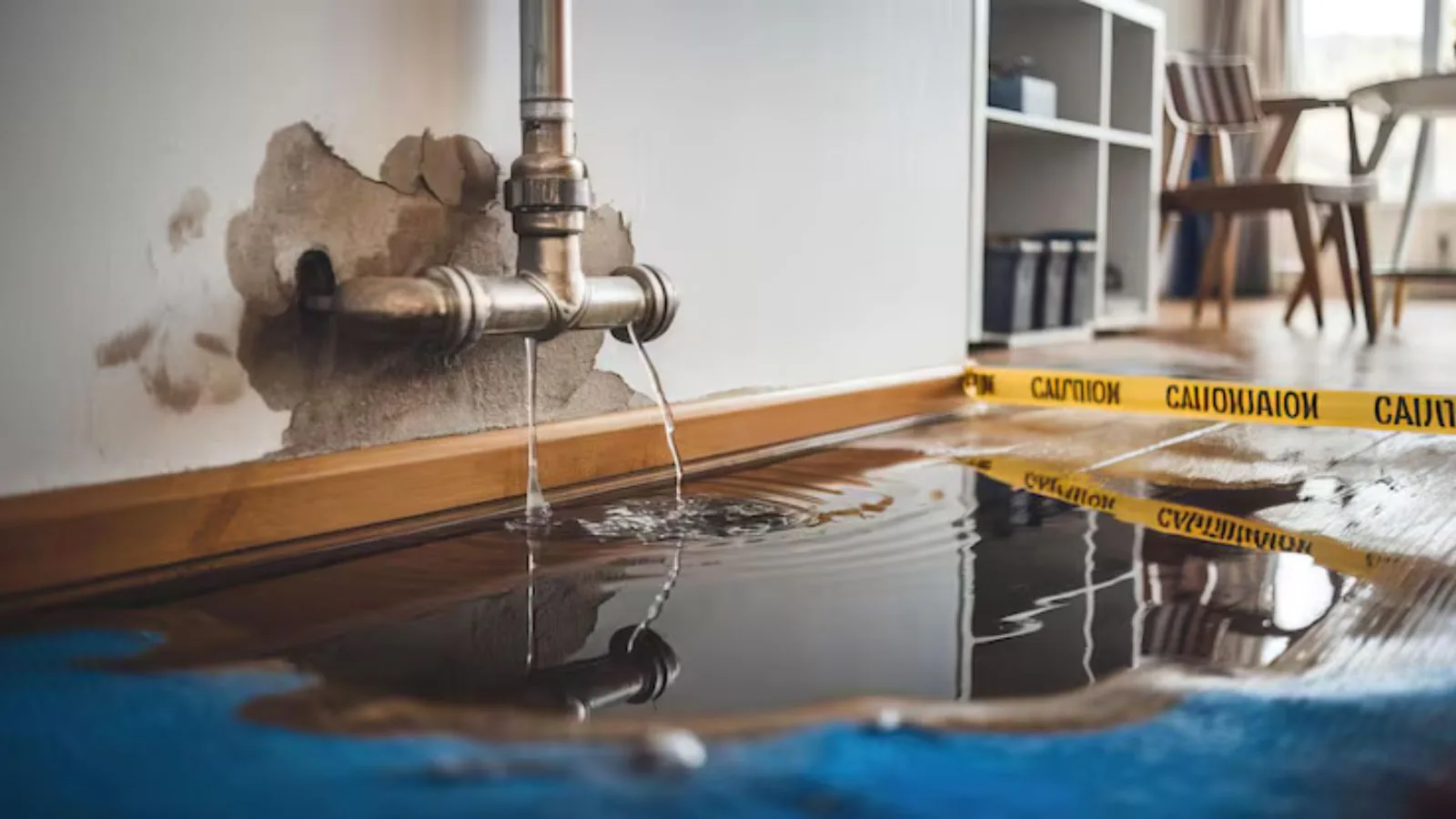
A leak in an occupied house gets noticed in minutes. In an empty one, it can run for days. Most vacation floods start with a small failure, such as a washing machine hose or an ice maker line, that nobody was home to catch.
This checklist covers the steps that matter most before a trip. Nothing here makes a loss impossible, and some steps depend on your home. If water has already gotten in, stop the source and call (833) 521-1033 for dispatch.
Shut off the water
The most reliable step is closing the main water valve. With no pressure in the pipes, a failed hose or fitting has little water to release. Learn where the main valve is and test that it closes.
If you want the ice maker or a sprinkler system to keep running, close the supply valves to the washer and dishwasher at least. Braided stainless supply lines are more durable than basic rubber hoses.
- Close the main water valve, or at least appliance shutoffs.
- Turn off the water heater or set it to vacation mode.
- Disconnect or shut off the ice maker line if you will be gone long.
- Make sure outdoor hose bibs are closed and hoses are disconnected.
Use sensors and smart shutoffs
Leak sensors placed near the water heater, washer, dishwasher and under sinks alert your phone when water appears. Some systems close the main valve automatically.
Even a simple battery sensor with a loud alarm helps if a neighbor or a family member can check on the house.
| Device | What it does | Where to place it |
|---|---|---|
| Leak sensor | Alerts when water touches it | Water heater, washer, under sinks |
| Automatic shutoff valve | Closes the main when a leak is detected | On the main supply line |
| Water monitor | Tracks flow and flags unusual use | On the main supply line |
| Drain pan with line | Catches small leaks | Under water heater or washer |
Came home to water?
Close the main and call dispatch.
Keep the heat on in cold months
In freezing weather, set the thermostat to a temperature that keeps pipes safe, and open cabinet doors under sinks on exterior walls. Pipes in garages, attics and crawl spaces are the first to freeze.
If the heat could fail, ask a neighbor to check the house. See frozen pipe water damage for how freeze breaks happen and what follows.
Plan for someone to check in
Ask a neighbor or friend to walk through every few days. Give them the location of the main valve and your contact number. Make sure they know whom to call if they find water.
Tell your insurer if you will be away for an extended period, since some policies have vacancy conditions. Ask your agent what applies.
A pre-trip checklist you can follow
A short routine before you leave catches most problems. Walk the house in the same order each time so nothing gets skipped, and do it a day before you leave if you can, so you have time to fix anything you find.
Check under sinks, around the water heater and behind the washer for drips, and test that the main valve closes smoothly.
- Look under every sink for drips or damp.
- Check the water heater and washer for moisture.
- Test the main shutoff valve.
- Set the thermostat to a safe temperature in cold months.
- Close the main or appliance valves.
- Give a neighbor the plan and your number.
What to do if a sensor goes off while you are away
If you have a smart sensor, decide in advance who will respond. A neighbor with a key and the main valve location can stop a leak in minutes, while a leak left for days can ruin floors and walls.
Tell that person to close the main first, then call a plumber and a restoration crew. Ask them to photograph what they see.
Winter travel from West Chester
Southwest Ohio has freeze and thaw cycles in winter. We do not quote local frequencies here, and the National Weather Service Wilmington, Ohio office publishes regional climate data for anyone who wants numbers.
Whatever the frequency, a house left cold for a week is at risk. Keep heat on, and consider a monitored sensor for a basement or crawl space where cold pipes and water heaters often sit.
Common Questions
Should I really turn off the main water when I travel?
It is one of the most effective steps, because it removes the pressure that feeds a leak. Check with a plumber if your home has a sprinkler or fire system.
Do leak sensors work without wifi?
Basic sensors sound a local alarm, which helps if someone is home or nearby. Wifi sensors alert your phone.
What if I find a leak when I get back?
Close the main, photograph the damage, and call a plumber and a restoration crew.
Who can check my West Chester home while I travel?
A trusted neighbor or friend is the usual choice. Give them the shutoff location and tell them whom to call if they see water.
Next steps
If you come home to a wet floor, water extraction and burst pipe water damage explain what happens first.
We also serve Cincinnati and nearby neighborhoods such as Port Union. See our service area page for the full list.