
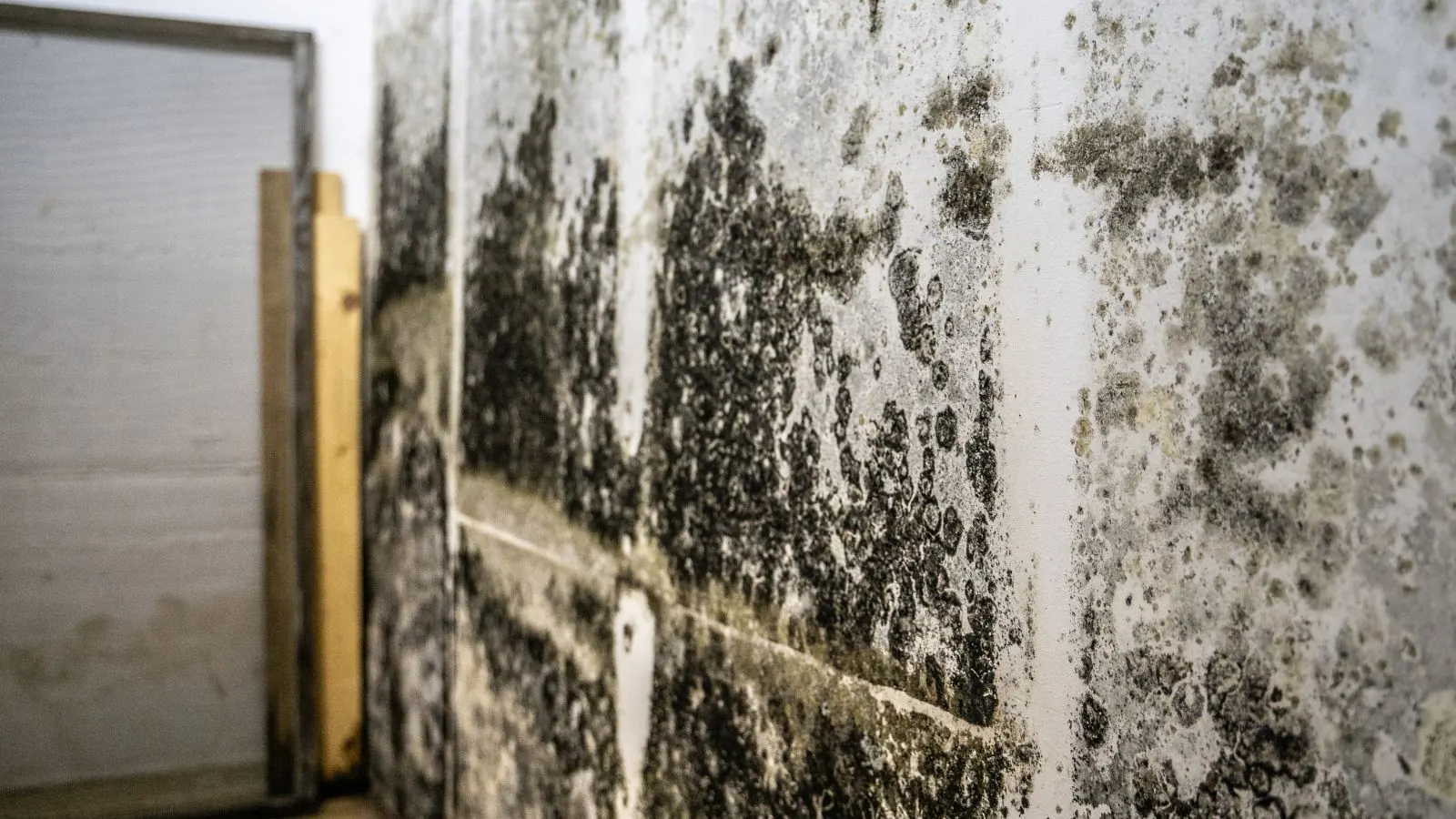
People ask what basement mold removal costs, and the honest answer is that it depends on the job. Two basements with the same visible patch can need very different work if one has growth behind the walls and the other does not. A fair quote follows a written scope.
We do not publish cost ranges because they would not fit your basement. This guide lists what moves the price so you can read a quote critically. To describe your own space, call (833) 521-1033.
Area and how much is hidden
Surface area is the obvious factor, but hidden growth matters more. Mold behind drywall, under carpet or in an insulated cavity is found by moisture readings and sometimes by opening the wall.
A quote based only on what you can see may change after the crew opens the area. Ask how hidden growth is handled and how changes are priced and approved.
Materials that have to come out
Drywall, insulation, carpet pad and ceiling tile with growth are usually removed, not cleaned. Wood framing is often cleaned. The amount of material removed adds labor and disposal.
Concrete and sealed block can usually be cleaned and dried in place, which is a smaller scope than replacing porous finishes.
| Factor | Pushes the scope up when | Pushes it down when |
|---|---|---|
| Area | Growth spreads across several walls | A small, contained patch |
| Materials | Drywall and insulation are affected | Mostly sealed concrete |
| Hidden growth | Moisture reaches the cavity | Readings show a dry cavity |
| Moisture source | Active leak still present | Source already repaired |
| Access | Cluttered or finished space | Open, empty basement |
Want your basement scoped?
Call and describe what you see. We will explain what is likely involved.
Containment, equipment and labor
Barriers, negative air machines, HEPA filtration and protective gear all go into a proper job. Equipment time and crew hours depend on the area and how long drying takes.
A very low quote may leave out containment or drying. Ask what is included and what is not.
The moisture fix and the rebuild
Removal is not the end. Repairing the moisture source, such as a sump pump, drainage or a leak, is a separate cost, usually from another trade. Rebuilding drywall, insulation, paint and flooring is also separate.
Insurance may help if the mold followed a covered water loss, and many policies cap or exclude mold in other cases. Read your policy and ask your insurer.
How to keep a scope honest without cutting corners
The goal is to compare like with like, not to find the smallest total. Write down each quote's included tasks, and highlight what is missing from the others. Containment, drying and disposal are the lines most often left out of low quotes.
Ask each company how it handles the unexpected, such as growth found behind a wall. A written process for change orders protects you from surprises.
- Containment barriers and negative air.
- Drying equipment and monitoring visits.
- Disposal of removed materials.
- Cleaning and verification at the end.
- Whether rebuilding is included or separate.
Paying for the moisture fix once
Spending on mold removal without fixing the source usually means paying twice. A failed sump pump, a bad grade or a leaking line has to be corrected, or the same conditions will return.
Ask the removal company to tell you what they think the source is, and get the repair done by the right trade. Then removal money is spent once.
Reading the line items in a quote
Line items tell you more than the total. Look for equipment listed by type and number of days, labor described by task, and disposal listed separately. Vague lines such as general cleanup make comparison hard.
If a quote lumps everything into one number, ask for a breakdown. A company with a clear process can produce one in a few minutes, and the breakdown shows what you are actually buying.
- Equipment by type and days on site.
- Labor described by task.
- Containment materials.
- Disposal and hauling.
- Testing, if included.
What to do while you collect quotes
Collecting quotes takes a few days, and the basement does not wait politely. Keep conditions stable while you compare.
- Run a dehumidifier and watch the humidity.
- Do not scrub or spray growth.
- Fix any active leak right away.
- Photograph the area for each company so they see the same thing.
Quoting mold work in West Chester
For work in West Chester, ask whether the quote includes the rebuild or only the removal and drying. Many homeowners compare a removal-only quote with one that includes drywall and paint, and the two are not the same scope.
If your home is in an association, such as many of the communities around Beckett Ridge, check whether exterior or common wall work needs approval before the crew starts.
Common Questions
Why will no one give a flat price over the phone?
Hidden growth and materials decide the scope. A walkthrough and readings let a crew write a scope you can compare.
Does insurance cover mold removal?
Sometimes, when it follows a covered water loss, and often with limits. Read your policy and ask your insurer.
Is a low quote always the right choice?
Not necessarily. Check what is included, such as containment, drying and disposal, before comparing.
Should I get more than one quote in West Chester?
Comparing scopes is reasonable. Make sure each quote describes the same work, including drying and rebuild, so you can compare like with like.
Next steps
Read what removal involves in mold remediation, and see basement water damage cleanup if water is still a problem.
We cover West Chester and Cincinnati. See our Cincinnati page and Beckett Ridge for local detail.